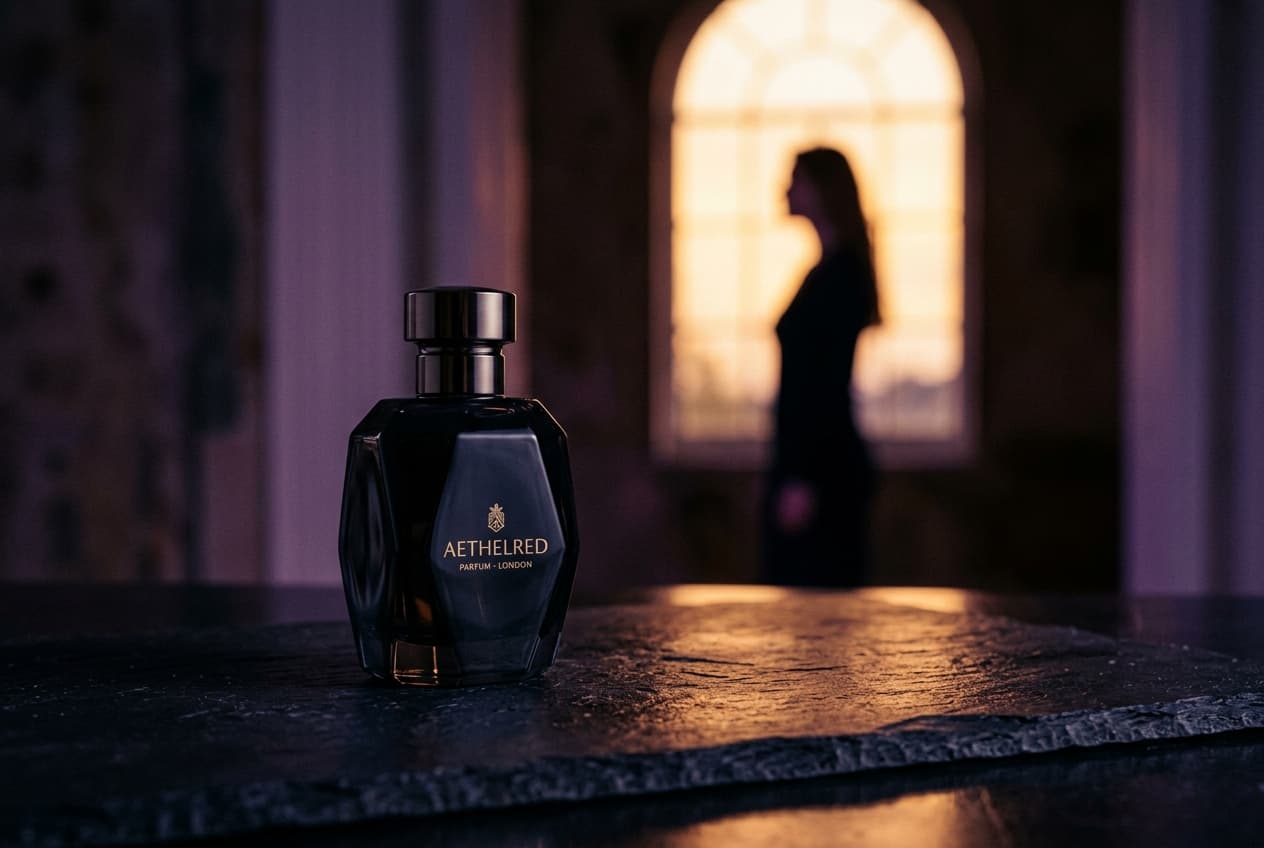
Why You Never Forget Your Ex’s Perfume
You can forget the sound of someone’s laugh within six months.
Within a year, the exact contour of their jawline in your mind begins to blur into a soft-focus photograph. Your brain is notoriously ruthless at compressing visual and auditory data to save cognitive bandwidth. It edits out details. It rewrites conversations.
Except when it comes to smell.
Three years after a relationship ends, you can be walking through a crowded metro station, waiting at a crosswalk in the rain, or standing in an elevator. A stranger walks past. In less than 150 milliseconds — before your conscious mind has even registered the color of their coat — your heart rate spikes. A knot forms in your stomach. Your brain drops you instantly, violently, and with photographic clarity back onto a sofa at 2:00 AM on a rainy Tuesday.
You didn’t choose to remember. You were ambushed by an olfactory ghost.
This is not poetry. It is brutal neurobiology. Here is the actual science of why scent is the only memory your brain is physically incapable of deleting.
1. The Brain’s Secret Backdoor: The Olfactory Highway
To understand why a perfume can emotionally paralyze you years after a breakup, you have to look at the wiring diagram of the human brain.
Every single sensory input you experience — sight, sound, touch, taste — must pass through a central routing hub called the Thalamus. Think of the thalamus as the brain’s chief executive officer or spam filter. It analyzes incoming data, strips away irrelevant details, applies rational logic, and decides whether the information is worth passing along to your conscious cortex.
When you see your ex’s photo or hear a song you both loved, that sensory data goes to the thalamus first. Your rational mind has time to prepare: "Ah, this is that song. We broke up two years ago. I am over it."
Scent is the only sense that completely bypasses the Thalamus.
When volatile fragrance molecules enter your nasal cavity, they bind to olfactory receptors that project directly into the Olfactory Bulb. From there, the signal travels via an unmediated super-highway straight into two primitive structures:
- The Amygdala: The emotional core of the brain responsible for raw fear, desire, grief, and euphoria.
- The Hippocampus: The brain’s master archivist responsible for associative long-term memory formation.
Because the rational thalamus is never consulted, scent triggers an emotional reaction before cognitive recognition. You feel the pang of heartbreak before you even realize you smelled cardamom, amber, or rose.
2. The Proustian Phenomenon: Scent as a Time-Machine
In 1913, French novelist Marcel Proust famously described how the scent and taste of a madeleine dipped in tea suddenly resurrected his entire lost childhood. Neuroscientists now call this the Proustian Phenomenon (or Odor-Evoked Autobiographical Memory).
Brain imaging studies at NYU and Karolinska Institute have revealed three unique properties of scent-triggered memories compared to visual or verbal memories:
- Higher Emotional Intensity: Scent memories score 200–300% higher in subjective emotional intensity than memories triggered by photographs or music.
- Resistance to Time Degradation: While visual memories degrade and become malleable (often being rewritten each time you recall them), olfactory associations remain locked in their original, unedited chemical state for decades.
- Visceral Somatic Response: Smelling a familiar intimate fragrance triggers physical somatic responses — changes in galvanic skin conductance, pupil dilation, and heart rate.
When someone wears a signature fragrance during a period of high emotional intimacy, their scent becomes the primary cryptographic key that unlocks that entire archive of feelings.
3. Why Cheap Perfumes Get Forgotten (And Great Ones Haunt You)
Not all perfumes have the power to become permanent memory anchors. The reason lies in the architecture of volatile compounds.
Most mass-market designer perfumes sold in department stores are 85–90% alcohol and water. They are built top-heavy with fleeting, synthetic citrus (limonene) and high-fructose sweetness (ethyl maltol) designed to smell punchy on a paper blotter in a mall.
These lightweight top molecules evaporate completely within 60 to 90 minutes. They sit on top of your clothes like an artificial cloud, never interacting with your biological chemistry. They are the olfactory equivalent of a disposable paper cup: pleasant for a moment, completely forgettable tomorrow.
The Architecture of an Unforgettable Signature
The fragrances that burn into human memory are built entirely differently:
- High Concentration (Extrait de Parfum): When oil concentration is elevated to 40%+ (like AURĒ’s 42% extrait), the perfume doesn’t violently disperse into the air. It binds to the sebum and natural lipid layers of the skin.
- Slow, Warm Molecular Release: Heavy base molecules — Ambroxan, Cardamom, Bourbon Vanilla, Tonka Bean, and Sandalwood — don’t evaporate quickly. They unfold over 10 to 12 hours, mixing with body heat and unique skin pH.
- The "Second Skin" Effect: At this concentration level, the perfume stops smelling like a product you sprayed on. It transforms into you — an intimate, warm sillage that someone only experiences when their head is against your collarbone.
That is why you never forget an extrait. You weren’t smelling a bottle. You were smelling a person.
4. Can You Ever "Erase" an Ex’s Perfume?
People often ask: "Is it possible to decouple a perfume from a painful memory?"
The honest answer from neuroscience is: almost never through willpower alone.
Because the olfactory-amygdala pathway is hardwired through survival evolution (early humans needed to permanently remember the smell of fire, predator musk, and poisonous plants), your brain considers olfactory associations permanent.
There are only two ways to neutralize a painful scent memory:
1. Active Re-Conditioning (Overwriting the Key)
If a particular note — say, green cardamom or smoky vanilla — is tied to a past relationship, you must deliberately wear a more complex, superior iteration of that profile in new, triumphant contexts (a solo trip, closing a massive career milestone, a celebration with friends). Over time, the brain maps secondary positive associations over the old file.
2. The Clean Break (The Molecular Reset)
If a scent profile is too deeply poisoned by nostalgia, switch entirely to a polarized olfactory territory. If your past was defined by heavy floral sweetness, migrate to dry mineral woods, cold spices, or clean ambroxan musks. Give your future relationships a completely clean, unwritten slate.
5. The Responsibility of Choosing Your Signature Scent
Every time you apply perfume, you are making an unconscious decision about how you will be remembered 10, 20, or 40 years from now.
You are creating the invisible artifact that someone will catch a trace of on a rainy street in a foreign city decades later, stopping them dead in their tracks.
Don’t smell like a marketing campaign. Don’t smell like a duty-free mall counter.
Choose an essence that possesses density, character, and depth — something formulated at a concentration that stays with you long after the lights have gone out.
Discover the AURĒ Collection (42% Extrait de Parfum) →
Three molecular signatures formulated in Surat: Gravity (Cold Cardamom & Bourbon Vanilla), Lucid (Crisp Bergamot & Ambroxan), and Bloom (Saffron, Turkish Rose & Sandalwood).