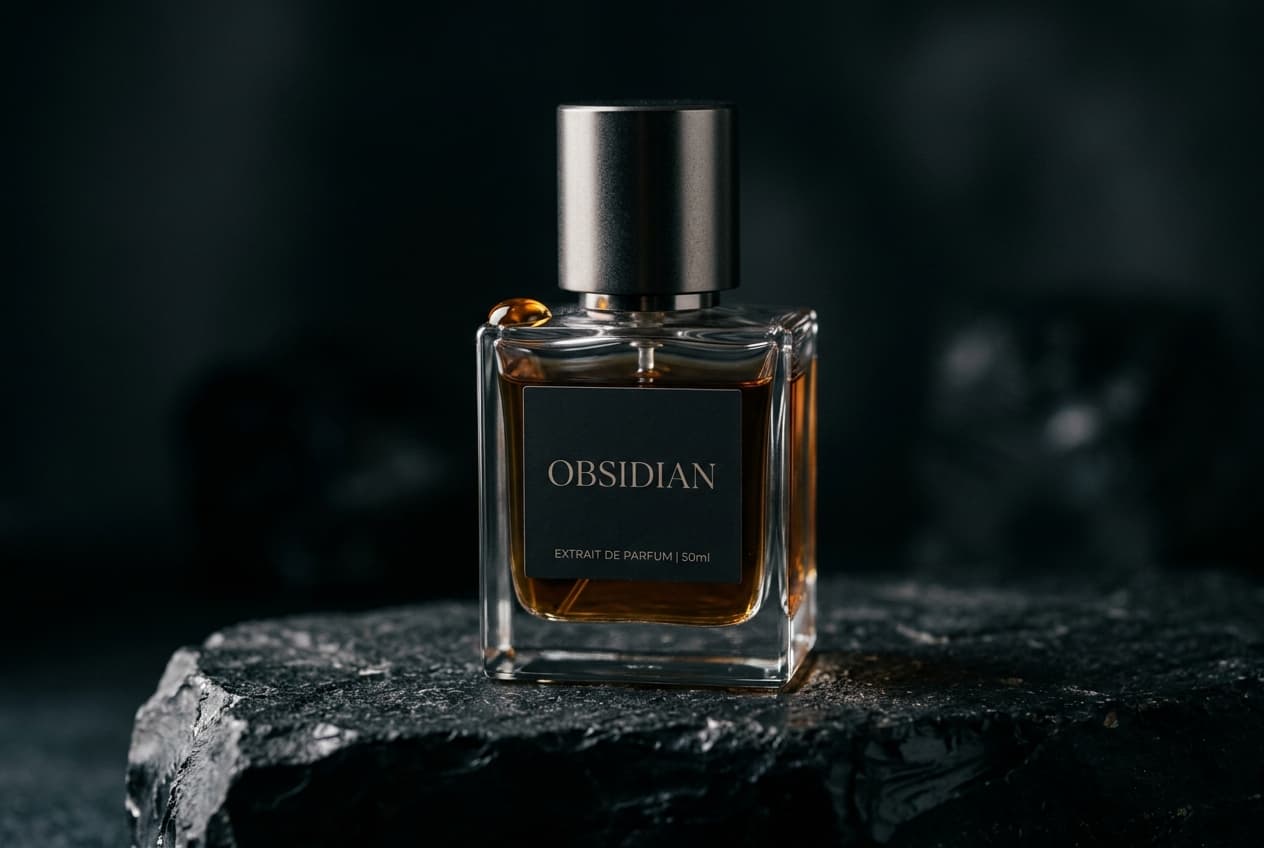
What Is Extrait de Parfum?
There is a hierarchy in perfumery that most people learn backwards. They encounter Eau de Toilette first — cheap, easy, everywhere — and work upwards. Eau de Parfum next (extrait de parfum vs eau de parfum, compared). Then perhaps Parfum, which most Indian brands don't carry at all. And then, at the top of the pyramid, something called Extrait de Parfum, which until very recently was almost impossible to find made in India.
We make it. That's why we're writing this.
But the story of extrait is more interesting than just a concentration number, and most of the guides you'll find online are either incomplete or wrong. This is the accurate version.
What the names actually mean
The terminology is French and the industry has never made much effort to standardise it globally, which is why there's so much confusion. Here is what each term refers to, and what it means in practice:
Eau de Cologne (EDC) — 2–4% fragrance oil in alcohol. Lasts 1–2 hours. The word "cologne" does not mean men's fragrance. It is a concentration level. The confusion around this has caused decades of unnecessary gendering in perfumery.
Eau de Toilette (EDT) — 5–15% fragrance oil. The most common format in India. Most body sprays and mid-range perfumes are here. Lasts 3–5 hours on skin, longer on fabric.
Eau de Parfum (EDP) — 15–20% fragrance oil. What most premium Indian brands sell when they say "perfume." The jump from EDT to EDP is significant — you're getting roughly twice the concentration. Lasts 6–8 hours with proper application.
Parfum / Extrait de Parfum — 20–42%+ fragrance oil. This is the category where AURĒ works. The French use these terms interchangeably. The oil concentration is so high that the fragrance behaves differently on skin — it's less about projection, more about depth. Less cloud around you, more trace in your wake.
At 42% concentration, a fragrance doesn't announce itself. It stays close. It evolves. What you smell at hour one is different from what you smell at hour eight. That's not a flaw — that's the design.
Why concentration matters in the Indian climate
Most perfume guides are written for temperate climates. Apply at pulse points, let it dry, enjoy. But India presents specific challenges that make fragrance concentration more consequential than anywhere else.
Heat accelerates evaporation. In Mumbai in May, an EDT that might last four hours in London will last two. The volatile top notes — the first things you smell — disappear fastest. In humid heat, the middle and base notes also diffuse more aggressively, which can make lighter fragrances feel overwhelming and then absent simultaneously.
This is exactly why higher concentrations perform better in Indian weather. An extrait at 42% has more base material to work with. The top notes still burn off in the heat, but there's enough depth underneath to keep the fragrance evolving on skin for 9–10 hours. The heat becomes an asset rather than a problem.
The irony is that India — with some of the world's oldest perfumery traditions, including attar, which is essentially a very high concentration perfume oil — defaulted to importing low-concentration international fragrances for the modern market. The attar makers knew something the Eau de Cologne era forgot.
How extrait performs differently — the actual chemistry
A fragrance at extrait concentration behaves differently on skin for three reasons that most guides don't explain.
The oil-to-alcohol ratio changes diffusion. Lower concentration fragrances are mostly alcohol. The alcohol is what carries the scent molecules off the skin and into the air quickly — which is why EDTs have strong initial projection. Extraits have less alcohol, so the release is slower, more gradual, and more controlled. You're releasing scent molecules for hours rather than minutes.
Skin chemistry plays a larger role. At 42%, you're applying enough base material that the fragrance genuinely interacts with your skin — its warmth, its pH, its natural oils. This is why the same extrait can smell noticeably different on two people. It is not a defect. It is the fragrance working correctly.
The drydown is longer and more complex. With an EDT, you're essentially smelling the dry-down from the first minute. There's not much layered material underneath to unfold. An extrait at 42% takes time to open. The full character of the fragrance often isn't apparent until two hours in, when the top notes have cleared and the heart begins its work. This is the kind of fragrance you get to know.
Why isn't extrait more common in India?
Two reasons. The first is regulatory — high-concentration fragrances require different IFRA compliance testing, and the standards were developed primarily for international markets. Indian manufacturers entering the market typically did so at lower concentrations to simplify compliance.
The second is formulation difficulty. Making an extrait that is stable, well-balanced, and genuinely good at 42% concentration is harder than making an EDP. More base material means more opportunity for things to interact in unintended ways. The sillage — the trail the fragrance leaves — has to be carefully calibrated so that a higher-concentration fragrance doesn't simply become overpowering.
When we developed our first extrait, we ran through fourteen formula iterations over eighteen months specifically to get the balance right at 42%. The saffron note had to be present but not aggressive. The oud had to anchor without dominating. The musk had to carry the whole composition through the long dry-down. None of that is possible to shortcut.
How to wear an extrait correctly
Less is genuinely more. The instinct when you first try an extrait is to apply the same amount you'd use with an EDT. Don't. One application to each pulse point — wrist and one side of the neck — is enough for most situations. The fragrance will be present. It will be noticed. It will still be there at the end of the day.
Skin moisture matters more at this concentration level. Apply an unscented moisturiser before spraying — dry skin allows even a high-concentration fragrance to evaporate faster than it should. The oil needs something to bind to.
Finally: don't rub. The instruction to rub your wrists together after applying comes from EDT habits, where it arguably helps diffuse the top notes. With an extrait, rubbing breaks apart the carefully layered material in the top and middle notes. Spray and let it settle. The fragrance knows what it's doing.
Is extrait right for you?
If you've been frustrated by fragrances that disappear by noon — yes. If you want something that performs in Indian heat without having to reapply — yes. If you want a scent that is yours alone, that reads differently on your skin than on anyone else's — yes.
If you want a fragrance that announces itself loudly from the moment you walk in — maybe not. Extrait is intimate. It's closer to the skin. The people who notice it are the ones close enough to notice you.
That, depending on what you're wearing it for, might be exactly the point.
India's first extrait de parfum house. 42% concentration. Made in Surat.