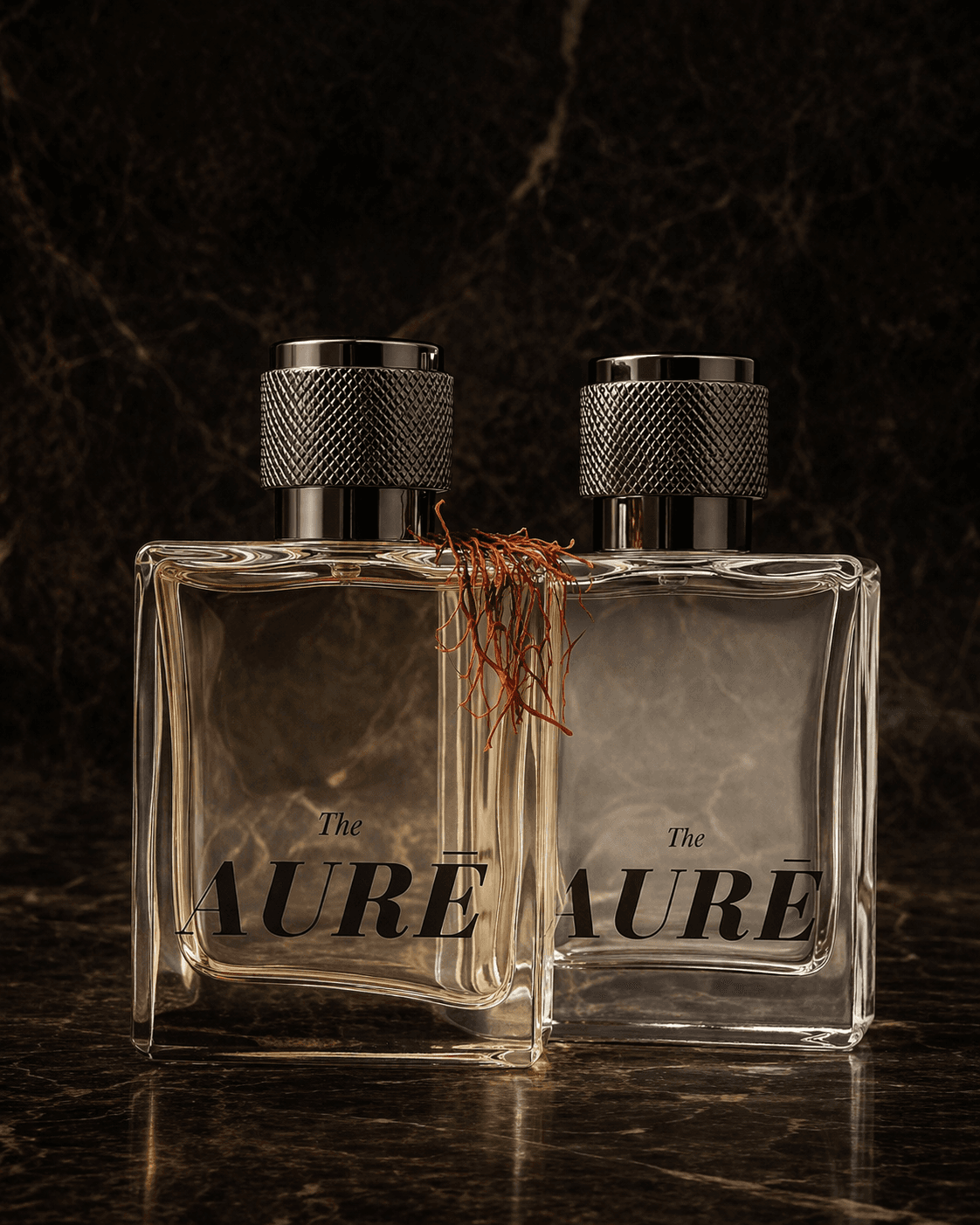
Wearing Two Perfumes at Once Is a Thing. Here's How to Actually Do It.
Somewhere on your Instagram or Reddit feed, someone is wearing three perfumes simultaneously and calling it their "signature combo." It sounds like a recipe for disaster. It isn't — if you know what you're doing.
Perfume layering — combining two or more different fragrances on the same skin at the same time — has gone from niche hobby to genuine mainstream trend in the last two years. The fragrance community calls it "the cocktail." Some people treat it like alchemy. Others stumble into their perfect combination by accident and never go back.
This guide explains how it works, what to combine, what to never combine, and how to find your own version of it.
Why people do this
The honest reason: no single perfume smells exactly like you want it to.
Every perfume is a finished composition — the perfumer made their choices and closed the door. When you layer, you reopen that door. You take two finished things and make something new. Something that doesn't exist in any bottle on any shelf.
The other reason is longevity. When you wear two fragrances, the base notes from both are working simultaneously. The result typically lasts longer than either fragrance would alone — there's simply more material on your skin.
And the third reason, which nobody says out loud but everyone feels: it makes your scent harder to place. People can't identify it. They lean in. They ask. That's the point.
The basic idea — how it works on skin
A perfume has three phases: top notes that hit first and fade fast, heart notes that settle in and define the fragrance, and base notes that anchor everything and last the longest.
When you combine two perfumes, you're combining all six of those layers simultaneously. They interact with your skin chemistry and with each other. What you smell immediately is not what you'll smell in two hours — and the two-hour version is usually the interesting one.
This is why layering requires patience. Don't smell your wrist the moment you've applied both. Walk away for 20 minutes. Come back. That's the combination you're actually wearing.
The four combinations that work
1. Heavy base + fresh top
This is the most popular combo and for good reason — it's almost impossible to get wrong.
Take a heavy, warm fragrance — something with oud, amber, or a dark vanilla — and layer a fresh citrus or aquatic fragrance on top. The fresh note lifts the heaviness. The heavy base gives the fresh note depth it wouldn't have alone.
In practice: something like Gravity (cardamom, bourbon vanilla, amberwood) layered with Lucid (mandarin, bergamot, aquatic). The result is a warm-but-clean combination that neither fragrance achieves by itself. The spiced sweetness of Gravity gets cut by the citrus brightness of Lucid. By the dry-down, you have something genuinely unusual.
2. Skin scent + statement scent
A skin scent is a fragrance that barely registers — musk, clean skin, almost nothing. It essentially amplifies whatever you put on top of it while making the whole thing smell like it's coming from your skin rather than a bottle.
Apply the skin scent first. Then apply the statement fragrance — something with real presence and character — on top. The skin scent acts as a canvas. The statement fragrance looks more natural, more you, less like something you sprayed on.
A skin-forward musk or unscented base works exactly this way underneath anything in the collection.
3. Same family, different houses
This one requires more knowledge but gives the most interesting results. Take two fragrances from the same family — both woody, both floral, both oriental — from two different brands. Since they share the same backbone, they won't fight each other. But since different perfumers made different choices within that family, the combination creates complexity neither has alone.
Two oud fragrances from different houses will give you an oud that smells like no single bottle in the world. That's the point.
4. One fragrance on skin, one on fabric
This is the easiest version for beginners. Spray one fragrance directly on your skin — pulse points. Spray a different fragrance on your clothes — collar, cuffs, scarf. Because fragrance evolves differently on fabric than on skin, you end up wearing two distinct scent trails simultaneously. People who are close to you smell one thing. The room you walk into smells something else.
No risk of the two fragrances fighting each other because they're on different surfaces. The combination shifts throughout the day as your skin fragrance evolves and the fabric note stays steadier.
The combinations to avoid
Two heavy fragrances at the same time.
Two oud-heavy, amber-heavy, or musk-heavy fragrances layered on top of each other will read as too much. Not complex — just overwhelming. Keep one element dominant and one lighter.
Two fragrances with strong distinct personalities.
If both fragrances are trying to make a statement simultaneously, neither one wins. A very smoky fragrance layered with a very sweet vanilla fragrance don't complement — they compete. The result smells like a headache.
Anything from completely different seasons.
A heavy winter oriental and a light summer aquatic belong in different months for a reason. Their structure doesn't have common ground. The combination usually smells confused rather than interesting.
A quick check before you commit:
Put one fragrance on your left wrist, one on your right. Smell both wrists close together — not separately. If the combination smells interesting even at this early stage, continue. If it smells like a mistake immediately, it will not improve with time.
How to find your own combination
The fragrance community does this very deliberately. Here's the process they use:
Start with your anchor. Pick the fragrance you love most — the one you'd wear if you could only wear one thing. This is the base of your combination. Everything else serves it.
Find what it's missing. If your anchor is dark and heavy, it might be missing brightness. If it's fresh and clean, it might be missing warmth. That missing quality is what you're looking for in the second fragrance.
Test on skin, not paper. A combination that smells interesting on a test strip will smell completely different on skin. Always test on your wrist. Always wait 20 minutes before deciding.
Keep notes. Seriously. When you find a combination that works, write it down — which fragrance on skin, which on fabric or on top, how many sprays of each. You will not remember the ratio a week later. Three words in your phone notes is enough.
Wear it for a full day before committing. The opening of a combination is not the same as the dry-down. The best combinations improve over six hours. Give them the time.
Some starting points — specific combos worth trying
If you have AURĒ fragrances, here are three combinations to start with:
Gravity + Lucid
Apply Lucid first — one spray on each wrist. Then Gravity on top — one spray on the neck only. The citrus and bergamot of Lucid cuts through the cardamom sweetness of Gravity. What you get is warm and clean simultaneously. Good for a day that goes from office to evening without changing.
Gravity + Bloom
Gravity on skin, Bloom on fabric. The spiced cardamom and bourbon vanilla of Gravity stay close to your body — intimate, grounding. The light fruit and green florals of Bloom exist in the air around you. Two different experiences at two different distances. The combination has range.
The mindset shift
Most people treat fragrance as something they wear. Layerers treat it as something they build.
It takes a few experiments to find combinations that work. Some attempts will smell wrong and you'll wash them off. That's fine — that's how everyone who's good at this learned. The people whose layered combinations stop you in a hallway didn't get there on their first try.
The upside is that when you find your combination — the two fragrances that create something that is genuinely, completely yours — you've done something no perfumer has done for you. You've made a fragrance that doesn't exist anywhere else.
That's a different relationship with scent than most people ever have.
All AURĒ fragrances are built to be worn alone. They also layer well with each other — that's not an accident. If you're starting out, Bloom and Lucid are the most forgiving starting points.