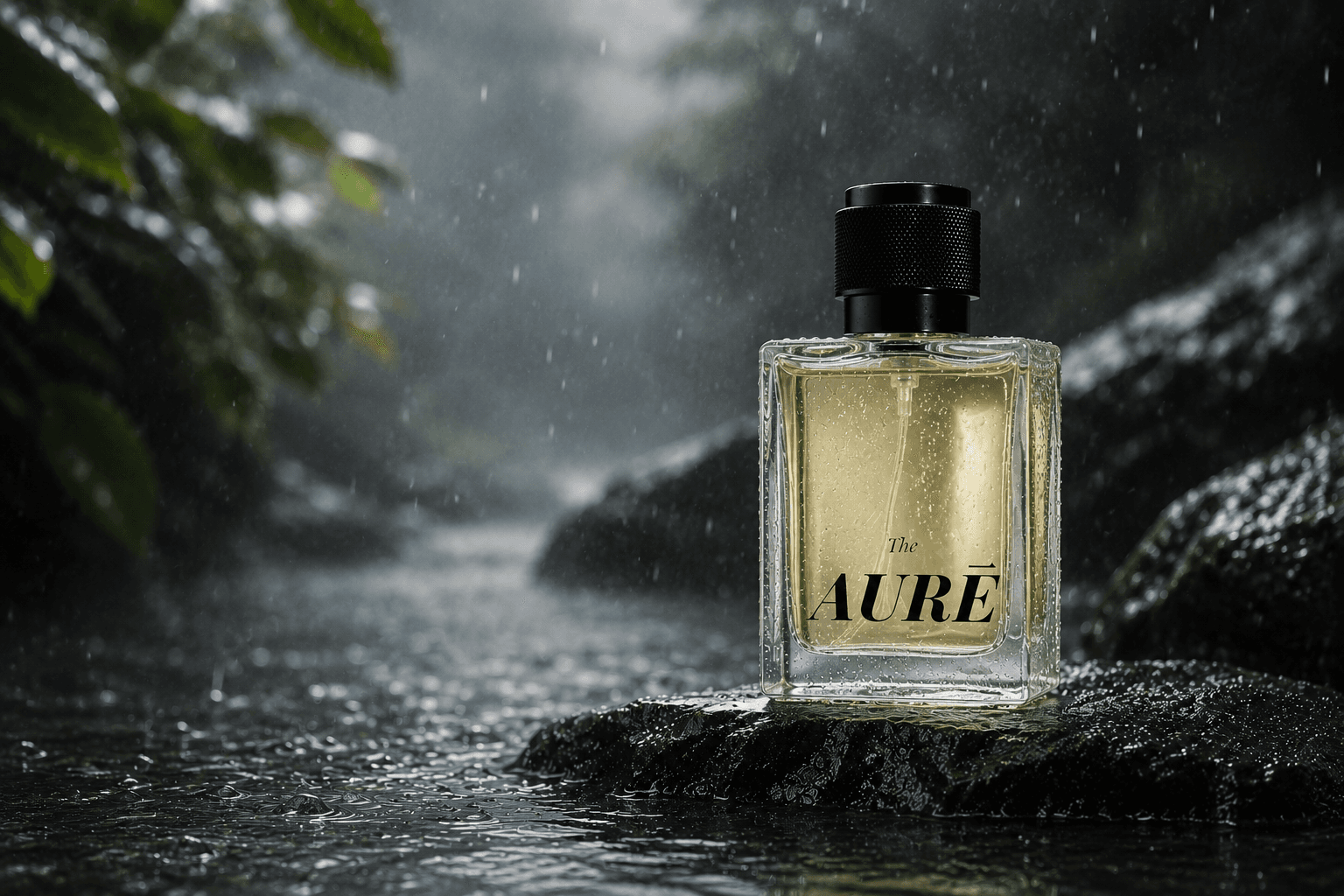
The Best Perfume for Monsoon Season in India
There is a particular cruelty to monsoon perfume advice.
Every list you find was written in a climate-controlled room by someone who has never stood on a Surat street in July, rain soaking through their shoes, wondering why the fragrance they sprayed an hour ago has completely disappeared. Or worse — turned.
Humidity does not kill fragrance. It changes it. And understanding the difference is the only thing that will help you choose well.
What Humidity Actually Does to Fragrance
Your skin is warm. Humidity raises the ambient moisture. When these two forces meet, something interesting happens: top notes — the bright, citrus, herbal opening of most fragrances — accelerate dramatically.
In dry weather, bergamot might stay with you for forty-five minutes. In monsoon, it's gone in fifteen. The opening sprint becomes a sprint.
What follows depends entirely on what's underneath. If the heart and base notes are strong — if they're built to last — the rain just strips away the preamble and gets you to the good part faster. If the heart is weak, or if the whole fragrance is built from synthetic top notes layered to give the illusion of complexity, the rain exposes it immediately.
This is why cheap Eau de Toilettes at 10–15% concentration don't survive monsoon. There's not enough material underneath to hold.
Why Concentration Matters More in Monsoon
A standard Eau de Parfum sits at 15–20% fragrance oil. In dry conditions, that's adequate. In humidity, you need margin.
AURĒ is built at 42% concentration — nearly three times the industry standard. The reason matters more in monsoon than any other season: when the top notes accelerate, there is still enough material in the base to anchor the scent for 9–12 hours. The humidity does its work. The fragrance doesn't disappear.
This is not a marketing claim. It's a function of formulation mathematics. More fragrance oil in the carrier means more material for your skin to hold, even when ambient moisture is competing.
What to Look for in a Monsoon Fragrance
Avoid: Heavy ouds, dark ambers, thick musks. These are built for cold air and enclosed spaces. In monsoon humidity, they can become oppressive — the warmth and moisture amplify everything, and what smells brooding in January smells suffocating in July.
Look for: Clean, cool, structured fragrances. Notes with direction — not just floating sweetness. Aquatics that have a backbone. Citrus that's paired with something that lasts. Vetiver. Peppermint. Ginger. Notes that read as air rather than weight.
The one thing everyone gets wrong: choosing a fragrance based on how it smells in the shop. In air-conditioned retail, every fragrance performs. Walk outside into the rain with it and discover what it's actually made of.
Lucid in Monsoon
We didn't design Lucid specifically for monsoon. We designed it to be the most genuinely fresh fragrance possible without being insubstantial — something that could hold for nine to twelve hours in any condition.
That said, it is the one you want in July.
Green mandarin and bergamot open with a sharpness that reads as cold water. Ginger follows immediately, giving the freshness direction — it's not just clean, it's clean with intent. Peppermint arrives in the heart and cools everything: the humidity, the heat, the mid-afternoon exhaustion of a Mumbai rainy season.
The ambergris and cedarwood base are the reason it works. They don't fight the freshness — they anchor it. In dry air, Lucid feels effortless. In monsoon, it feels essential.
The longevity in humid conditions: nine to twelve hours on skin, two to three sprays.
A Practical Monsoon Fragrance Guide
Morning meetings or commute: Two sprays on the chest and one on the wrist. The warmth of your body will drive the opening notes into the air without needing to compete with the humidity.
Skip the hair. Humidity in hair amplifies fragrance unpredictably and can turn sweet notes cloying. Skin only.
Don't reapply before testing. Give it three hours first. A 42% concentration extrait needs time — what you're smelling in hour one is not what you're wearing in hour six.
If your current perfume disappears in the rain: The issue isn't the rain. It's the concentration. No amount of additional sprays will fix a 12% formulation in Indian July. You need more material in the bottle.
The Month to Experiment
Monsoon is actually the best time to understand what a fragrance is really made of. The heat and humidity remove the pretence. You find out quickly whether what you're wearing has depth or just packaging.
If you've been wearing the same perfume for years and losing it every monsoon, this is the month to try something with more underneath.
Lucid is ₹999 for 50ml. Around 500 sprays. At 42% concentration, it will still be with you at dinner.
The rain won't touch it.